
Short Story
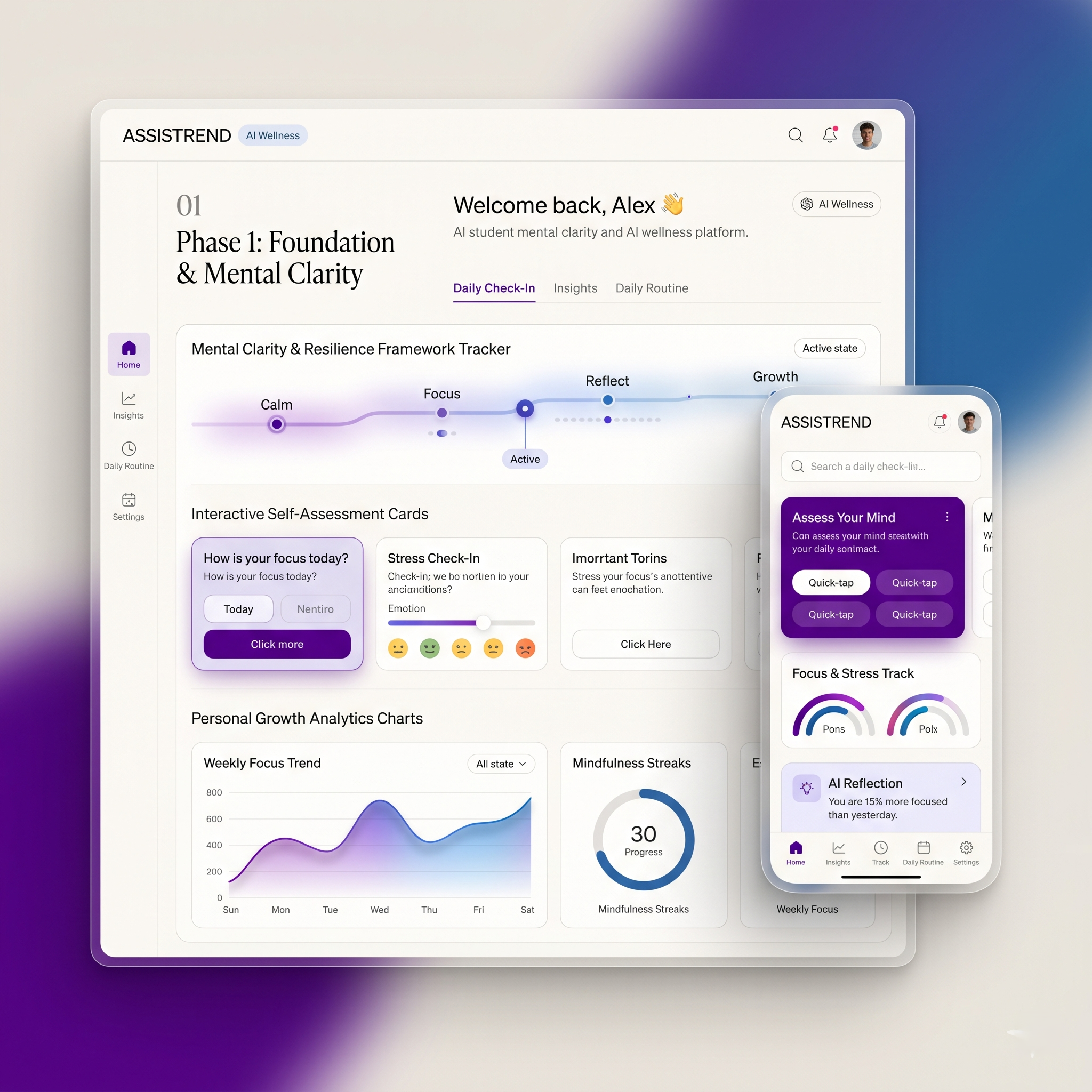
Assistrend is a proactive, community-first wellness companion for India’s youth — built on a 10,000-member community before the product even existed. Instead of waiting for a mental health crisis, it maps a young person’s emotional journey and connects them to peers, mentors, and psychologists before things get bad. Live in beta at Christ University, Bangalore, with 326 student registrations.
Assistrend AI
-
₹10,000,000.00
Funding Goal -
₹0.00
Funds Raised -
0
Days to go -
Target Goal
Campaign End Method

Campaign Story
It’s 2:13 AM. 47 minutes of scrolling just left someone feeling worse, not better. That’s the moment Assistrend is built for — not the crisis point, the quiet decline before it.
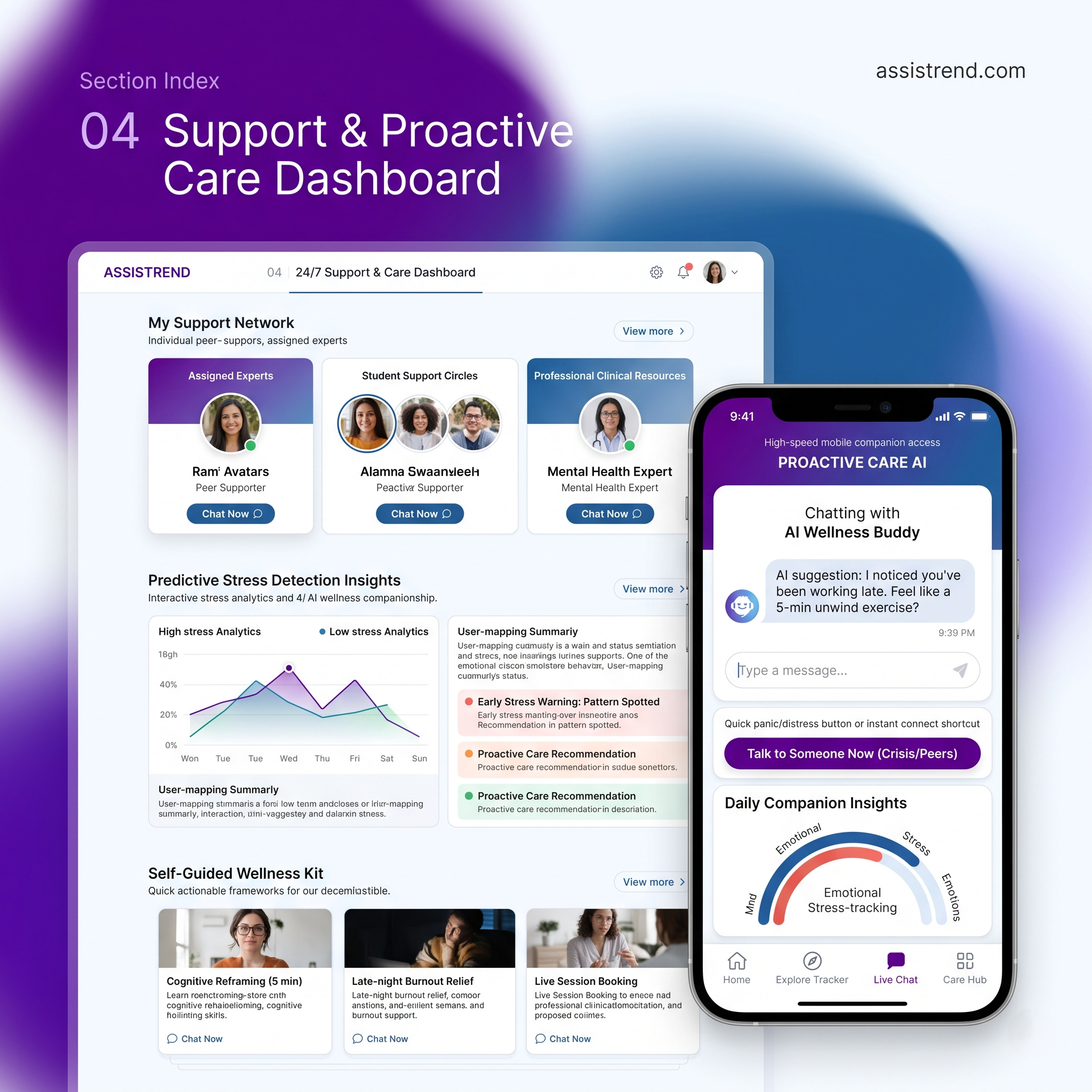
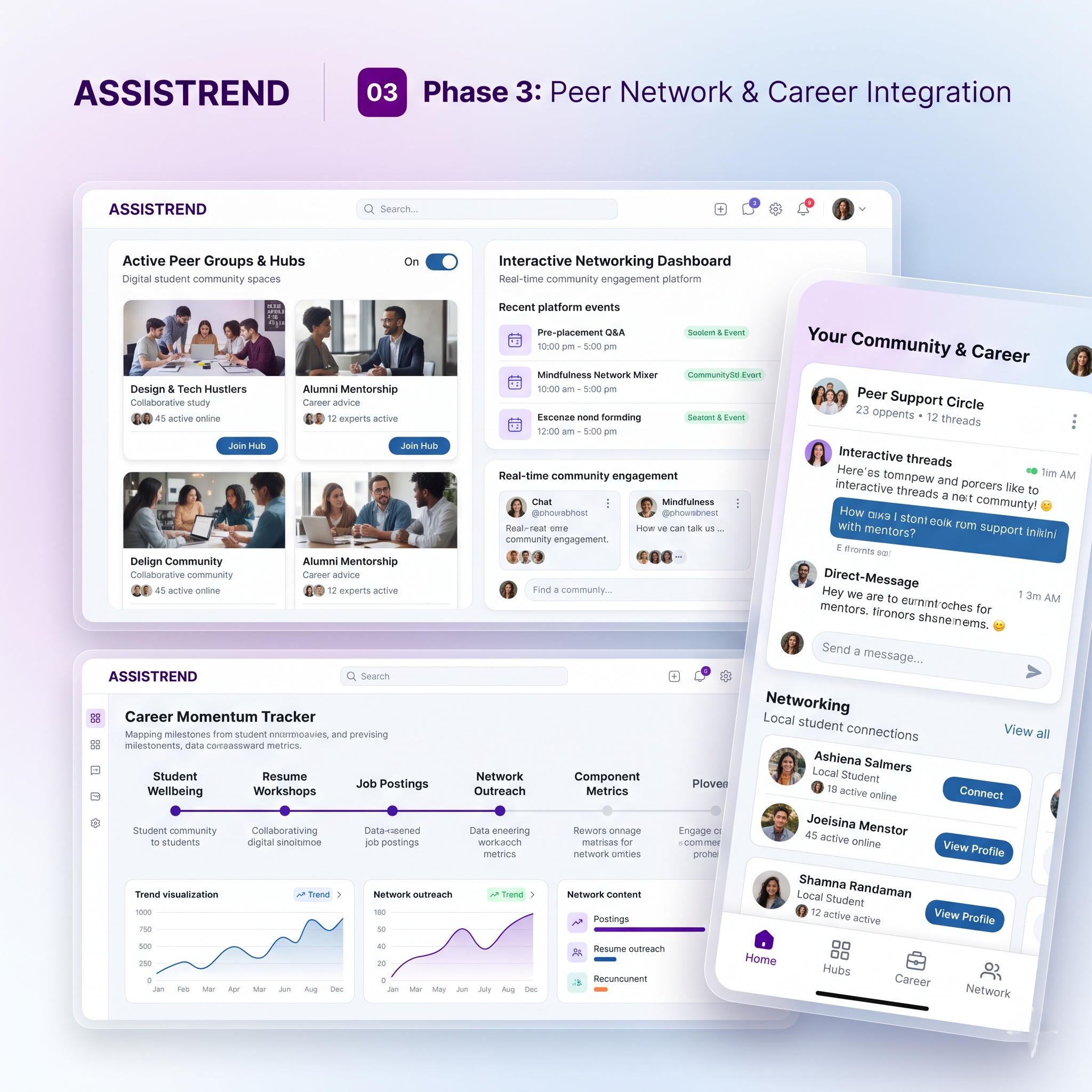
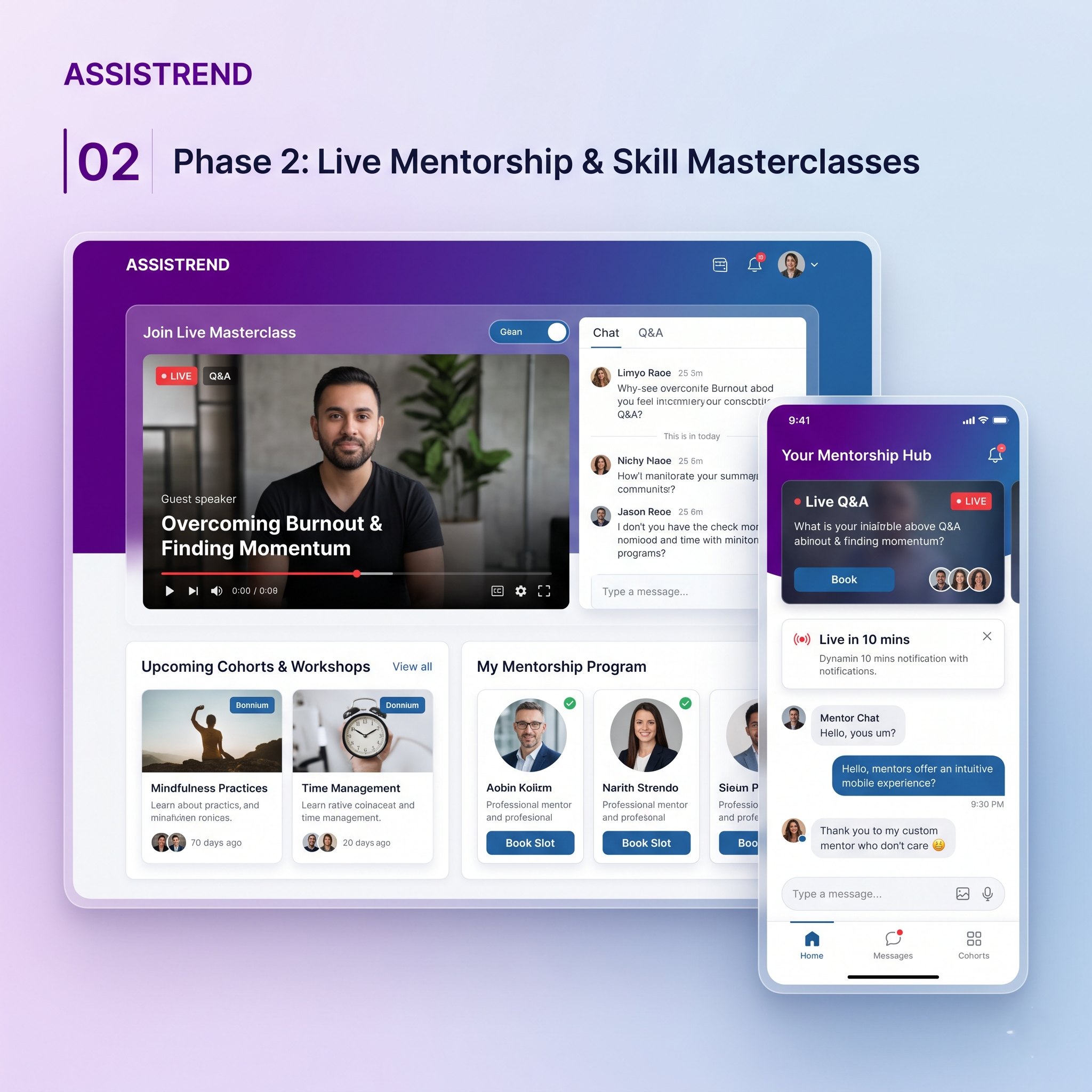
In India, 69.9% of college students report moderate-to-high anxiety and 59.9% report moderate-to-high depression, yet under 10% access any mental health service. Most existing tools — Wysa, Amaha, YourDOST — are reactive: a chatbot or counselor waiting for someone to reach out. Assistrend’s bet is that reactive isn’t enough. It built a purpose-driven community ecosystem instead: peers, mentors, a licensed psychologist layer, and a switching AI chatbot that moves between modes (general, reactive, semi, and proactive) depending on what a person actually needs in that moment.
The product runs on two layers. A Purpose Layer up front — a community app helping young people pursue their goals through peers, mentors, and content that builds direction (Mayo Clinic research backs the link between a sense of purpose and mental wellbeing). And a Wellness Layer underneath — an AI system built on existing therapeutic frameworks that also develops its own guided sessions, with its architecture being built toward DPDP Act 2023 compliance for the sensitive data it handles.
The most ambitious piece is the Proactive Mode: deep user mapping across multiple touchpoints, journey forecasting against a reference library of 1,000+ manually mapped emotional-gap cases, risk identification, and preventive action — all before a crisis point is reached. The founders are candid that this is still their biggest unproven asset: the model architecture and validation methodology for those 200+ reference cases are still being formally documented. It’s the thing worth watching most closely as the company matures — and, done right, it’s also their real moat against better-funded reactive-chatbot competitors like Amaha ($29M raised).
What makes this stand apart from most pre-seed decks is the sequencing: the community came first. 10,000+ active members across WhatsApp and LinkedIn, 100,000+ organic reach on just ₹5,000 of spend, Version 1 live with 90 beta testers, and a Version 2 launch at Christ University, Bangalore that pulled 326 registrations with department-level onboarding interest organically. The company has also cleared real non-dilutive validation: a ₹3,00,000 KSUM Idea Grant, selection into NVIDIA Inception (GPU credits, AI infra access), and an external ₹5,00,000 angel check from a former bank branch manager. The founders have also individually been selected into Founder Institute’s Silicon Valley program, Draper University, and multiple national startup finals (IIT Mandi, CampusFund Punjab, IGNITE Kerala).
The go-to-market is community-led, not ad-led: activate the existing 10K WhatsApp base (Months 1–3), expand through Kerala colleges via partners to ~90K reachable students (Months 4–7), push South India penetration (Months 8–10), then a national rollout through student ambassadors (Months 11–12). Revenue is three-pronged — a B2C freemium tier (free risk-ID and limited connects, ₹99/month for personalized action plans), B2B campus wellness dashboards (₹15–25K/year per institution), and a 15–20% commission on third-party therapy sessions booked through the platform — projecting roughly ₹68L in Year 1 ARR against a reconciled model.
The founders are refreshingly upfront about where they actually are: “our traction to date is community and pre-launch validation — not yet paying-customer revenue. That’s exactly what this round funds.” Their own next-90-day roadmap is concrete: convert the beta cohort to paying users or lock in LOIs from 2–3 anchor colleges, publish real retention/DAU-MAU/NPS numbers, and finish the DPDP compliance pack for handling sensitive mental-health data.
Rewards
1799 or more
Permanent Founding Star Backer Badge — visible inside the Assistrend community app itself, since the product is a community — this one lands differently than on other listings. Lifetime free or discounted access to the ₹99/month premium tier — personalized action plans and curated interventions, forever. Early access to every new mode as the Centre/Portal system expands beyond its current four modes. Founding Supporter recognition in the app’s community space — status that means something on a platform literally built around belonging. Input channel on community programming — vote on workshops, mentor types, campus expansion priorities. Institutional backers (colleges, parent groups, counseling bodies): discounted founding-rate B2B dashboard licensing + early access to campus wellness analytics. Behind-the-build access to the proactive risk-mapping research as it’s documented — a rare look at the company’s most ambitious, least-proven bet.
Reviews
There are no reviews yet.