

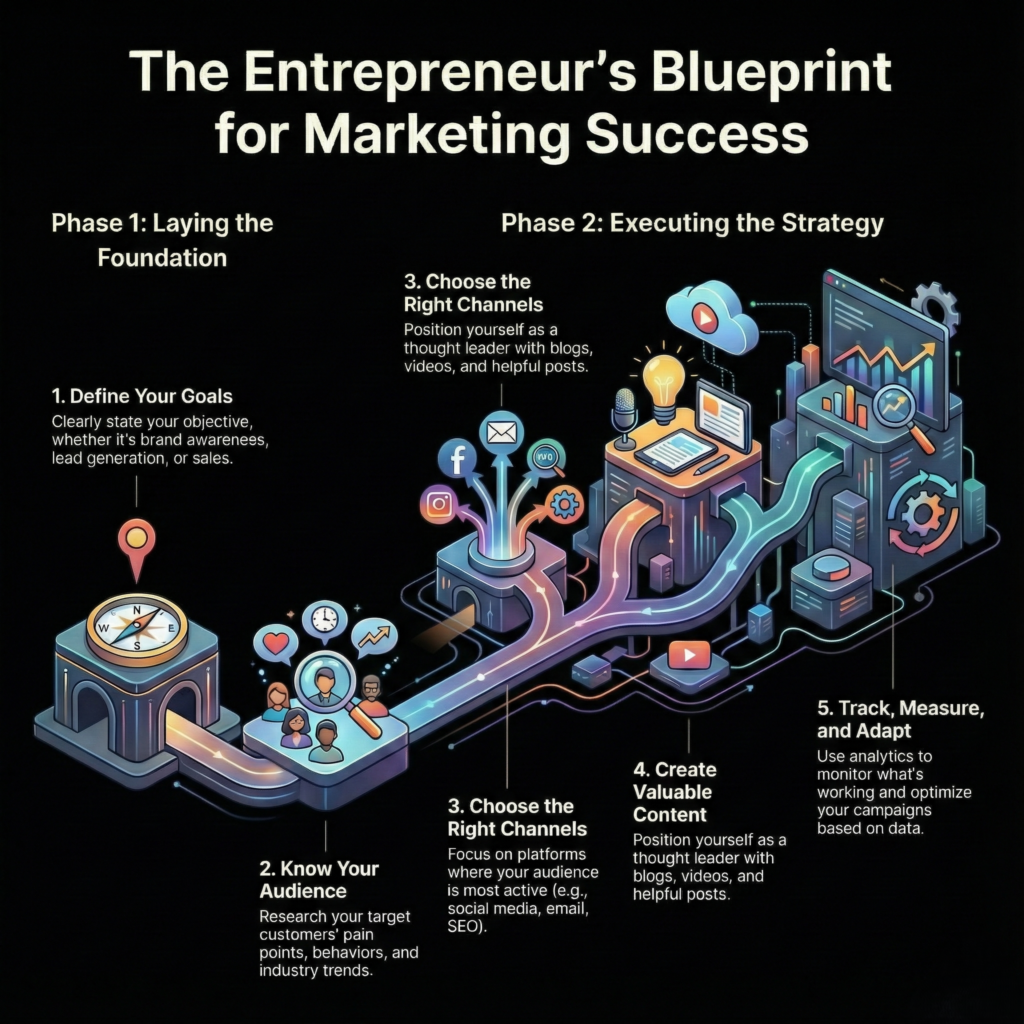
As an entrepreneur, your marketing strategy is your compass—a roadmap that guides you toward success. Whether you’re launching a startup or scaling an existing business, a well-structured marketing plan is essential. Let’s explore some effective marketing strategies tailored for entrepreneurs:
Set Clear Goals and Objectives:
- Before diving into tactics, define what success looks like for your business. What are your specific marketing goals? Is it brand awareness, lead generation, or sales conversion?
- Align these goals with your overall business vision. Clarity here will shape your entire strategy.
Know Your Audience and Industry:
- Understand your target audience—their demographics, preferences, pain points, and behaviors.
- Research your industry thoroughly. What trends are shaping it? Who are your competitors?
Choose the Right Marketing Channels:
- Not all channels are equally effective for every business. Consider where your audience spends time.
- Online channels: Social media (Instagram, LinkedIn, TikTok), content marketing (blogs, podcasts, videos), email campaigns, SEO, and paid advertising.
- Offline channels: Events, trade shows, direct mail, and local advertising.
Content Marketing:
- Create valuable, relevant content that educates, entertains, or solves problems for your audience.
- Blog posts, ebooks, webinars, and infographics can position you as an industry thought leader.
Leverage Social Media:
- Choose platforms based on your audience. Instagram for visual content, LinkedIn for B2B networking, and TikTok for younger demographics.
- Engage authentically, respond to comments, and build a community.
Influencer Marketing:
- Collaborate with micro-influencers or industry experts. Their endorsement can boost credibility.
- Ensure alignment with your brand values and niche.
Email Campaigns:
- Email remains a powerful tool. Nurture leads, share updates, and offer exclusive content.
- Personalize emails based on user behavior.
SEO (Search Engine Optimization):
- Optimize your website for search engines. Use relevant keywords, create quality backlinks, and improve site speed.
- Local SEO matters for brick-and-mortar businesses.
Paid Advertising:
- Google Ads, Facebook Ads, and other paid channels can drive targeted traffic.
- Set a budget, monitor performance, and optimize campaigns.
Track Metrics and Iterate:
- Use tools like Google Analytics to measure performance.
- A/B test landing pages, email subject lines, and ad creatives.
- Adapt based on data—what’s working and what’s not.
Remember, marketing isn’t a one-size-fits-all approach. Tailor these strategies to your unique business, stay agile, and be ready to pivot when needed.